How the Cold War was argued
Senators, witnesses and a committee that heard it first. Transcripts of rooms the public could not enter, printed years later.
- Exhibit 01
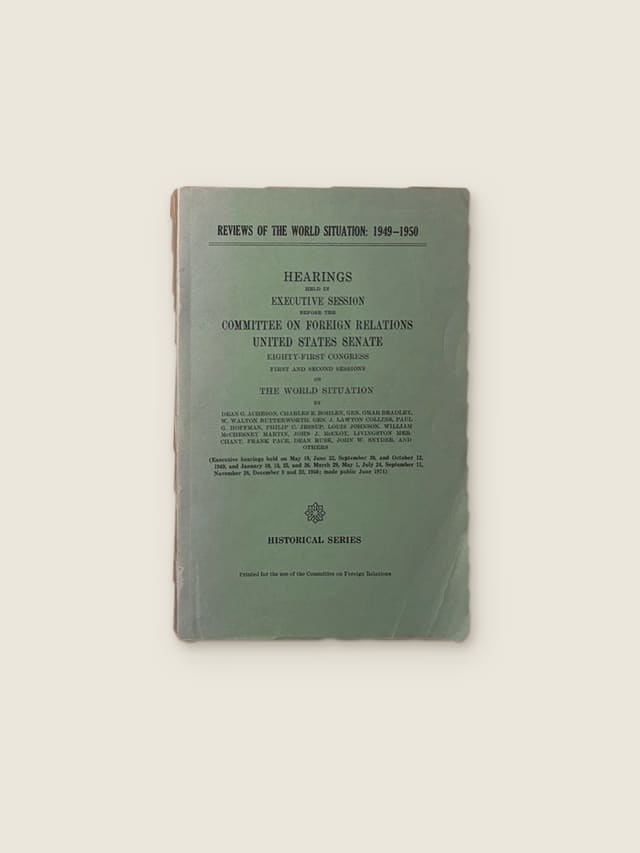 In a lot
The Senate’s 1959 closed sessions, made public in 1982
The eleventh volume of the Historical Series records the executive sessions of the Senate Foreign Relations Committee from the first session of the Eighty-Sixth Congress.
No. 0086 · 1982
- Exhibit 02
 In a lot
Congress turns its investigators on domestic intelligence
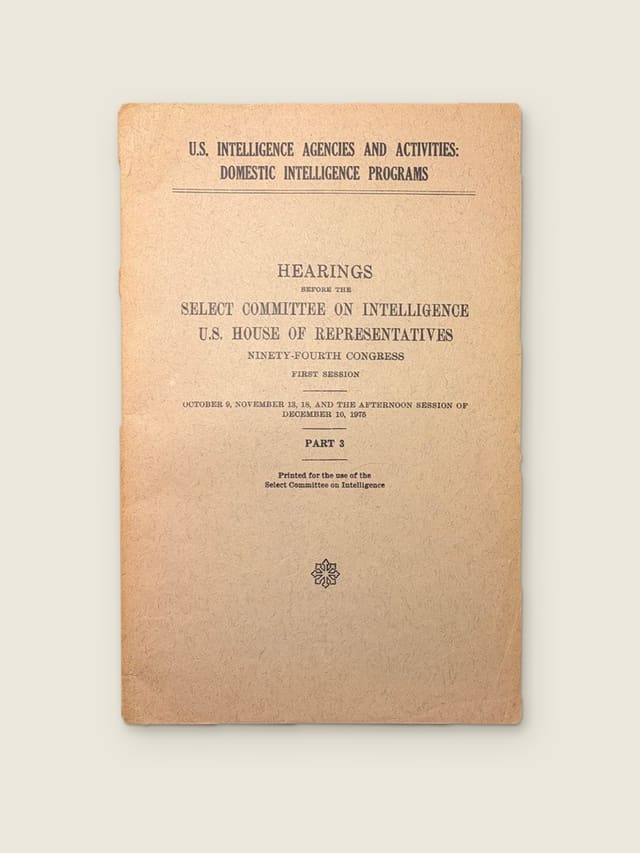
The House Select Committee’s 1975 hearings on domestic intelligence programs, Part 3, in an unannotated copy.
No. 0080 · 1975
- Exhibit 03
 $69.95
The Civil War as the European powers saw it
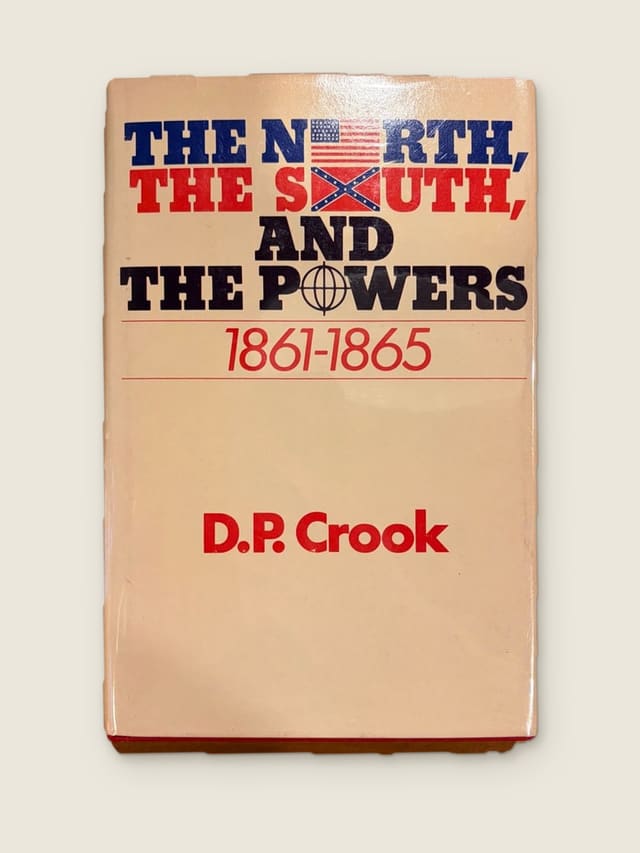
D. P. Crook’s 1974 history explores how the Union and the Confederacy pursued diplomatic support from Britain and other foreign powers.
No. 0162 · 1974
- Exhibit 04
 In a lot
The paperwork behind the House intelligence inquiry
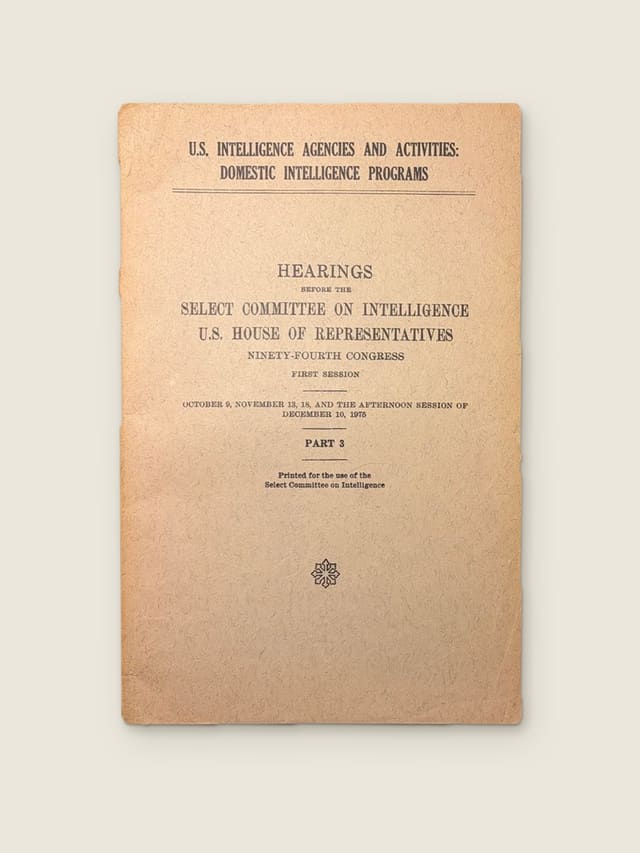
Part 6 of the House Select Committee’s Committee Proceedings II, in light tan printed government wrappers.
No. 0084 · 1976


Much of the Cold War was argued in rooms the public could not enter. Years later, some of it was printed.
The Senate Foreign Relations Committee’s closed hearings on the origins of the Truman Doctrine, taken in 1947, were published in 1973. Its reviews of the world situation for 1949–1950 were released in 1974. Sessions from 1959 were made public in 1982, and from 1961 in 1984. A House select committee took up domestic intelligence in 1975.
Each volume is a transcript: a question, a witness, an answer. The dates matter twice, once for when it was said and once for when everyone else was allowed to read it.
How it is assembled. Records whose subjects include the Cold War, U.S. intelligence history, Congressional oversight, government hearings, diplomatic history or US–Soviet trade. It is a rule over the records, so it changes when the inventory does. 4 articles now.